
Educational Disclaimer: Maple Wealth Guide provides general financial education only. We do not offer financial, investment, tax, or legal advice. Nothing on this website should be considered a recommendation. Always consult a licensed professional for personalized guidance.
What Is Big Data in Finance?
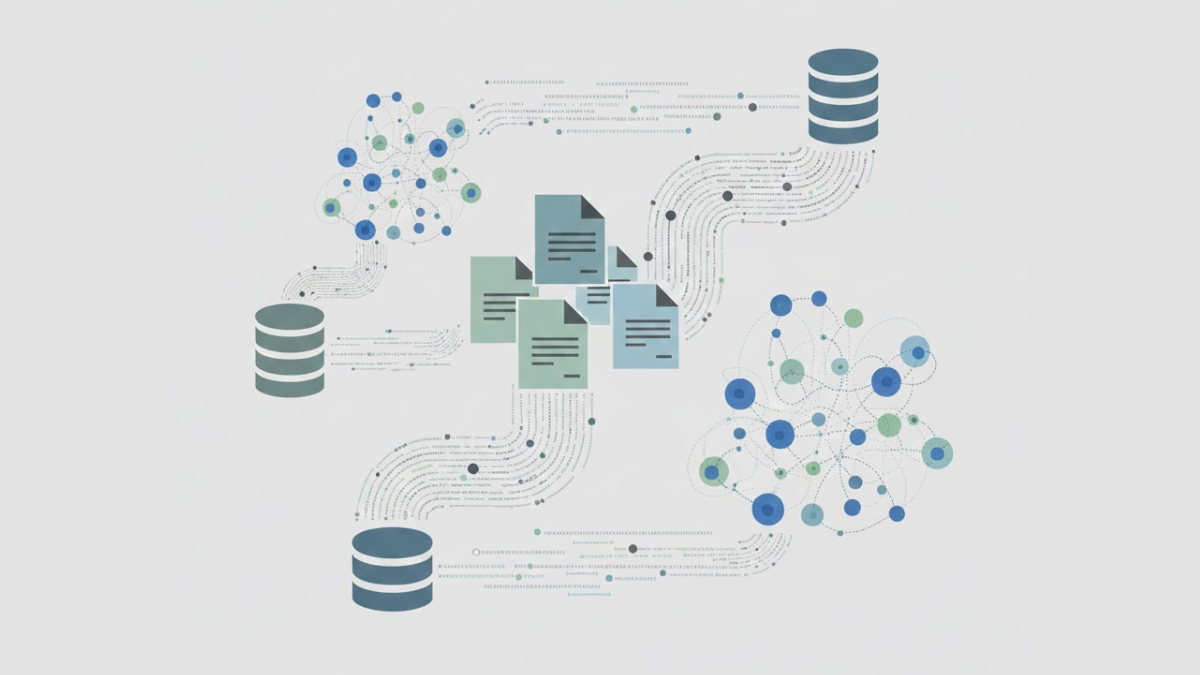
"Big data" refers to extremely large datasets that may be analyzed to reveal patterns, trends, and associations. In financial contexts, big data concepts are discussed in relation to various types of information processing.
This article provides educational information about these concepts. It does not provide instructions or guidance for individual application.
Types of Data Discussed
Market Data
Market data includes price movements, trading volumes, and other transaction-related information. The volume of this data has increased significantly with electronic trading and global market access.
Alternative Data
Researchers and institutions discuss "alternative data" sources that go beyond traditional financial information:
- Satellite imagery of commercial activity
- Social media and news content
- Web traffic and search patterns
- Credit card transaction aggregates
- Supply chain and logistics information
Textual Information
Large volumes of text-based information, including company filings, news articles, analyst reports, and earnings call transcripts, are discussed as sources for computational analysis.
How AI and Big Data Relate
AI and big data are often discussed together because:
- Large datasets may be difficult to analyze with traditional methods
- AI techniques such as machine learning can process large volumes of data
- Pattern recognition may benefit from more extensive data
- Computational resources have made large-scale analysis more feasible
⚠️ Important: The ability to process large amounts of data does not guarantee useful insights or accurate predictions. More data does not automatically lead to better outcomes, and data analysis involves significant challenges.
Challenges and Limitations
Data Quality
Large datasets may contain errors, inconsistencies, or missing information. The phrase "garbage in, garbage out" reflects the principle that analysis quality depends on data quality.
Spurious Correlations
With enough data points, statistical correlations can appear by chance rather than representing meaningful relationships. Distinguishing genuine patterns from coincidence is a significant challenge.
Privacy and Ethical Concerns
The collection and use of large datasets raises privacy and ethical questions. Regulators and researchers discuss appropriate boundaries for data use in financial contexts.
Access and Cost
Advanced data analysis capabilities typically require significant resources, expertise, and infrastructure. Access to sophisticated data and analysis is not equally available to all market participants.
Institutional vs. Individual Contexts
The big data and AI capabilities discussed in financial research primarily apply to institutional contexts. Large financial institutions may invest in data infrastructure and analysis capabilities that are not available or practical for individual investors.
Claims about AI and big data capabilities should be understood in the context of who has access to these resources and how they are applied.
Educational Summary
Big data and AI represent concepts that are commonly discussed in financial research and institutional contexts. Understanding these concepts includes recognizing their limitations and the significant challenges involved. This educational article provides general information without suggesting how individuals should apply these concepts.
Subscribe to Educational Updates
Occasional emails with new educational articles and glossary updates about Canadian investing and retirement-related topics. Educational content only.
Educational content only. No financial advice. No calls. Unsubscribe anytime.
View our Privacy PolicyRelated Educational Guides
About Maple Wealth Guide
Maple Wealth Guide is an educational publication that explains investment concepts, retirement-related topics, and personal finance information for Canadians aged 50 and over. We are not licensed financial advisors and do not provide personalized recommendations. All content is for educational purposes only.
Non-Affiliation Statement: Maple Wealth Guide is not affiliated with any banks, brokerages, investment platforms, or government agencies.